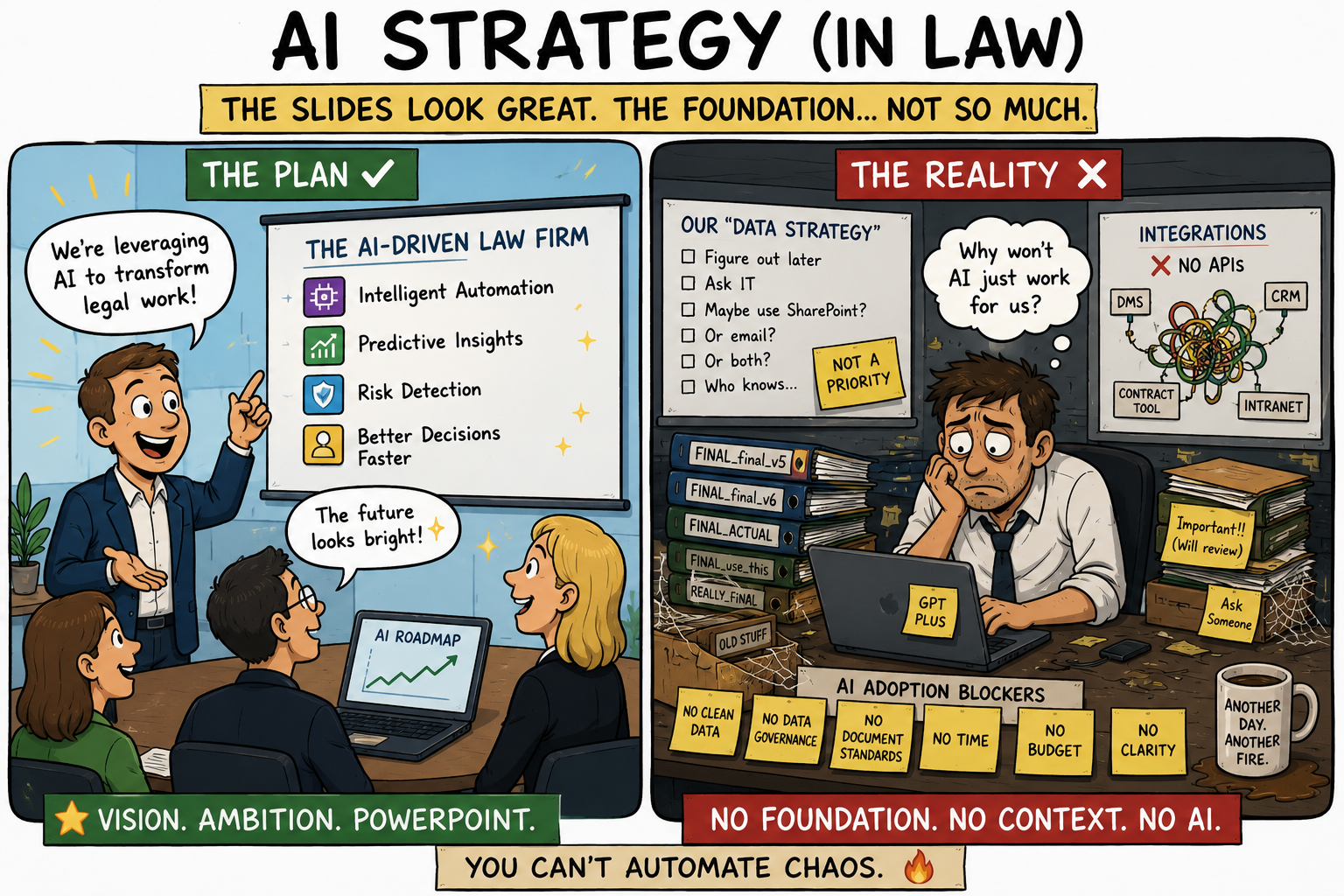
The future of legal services may depend less on documents — and more on infrastructure.
Corporate law firms are increasingly evolving from isolated advisory organizations into integrated legal service platforms.
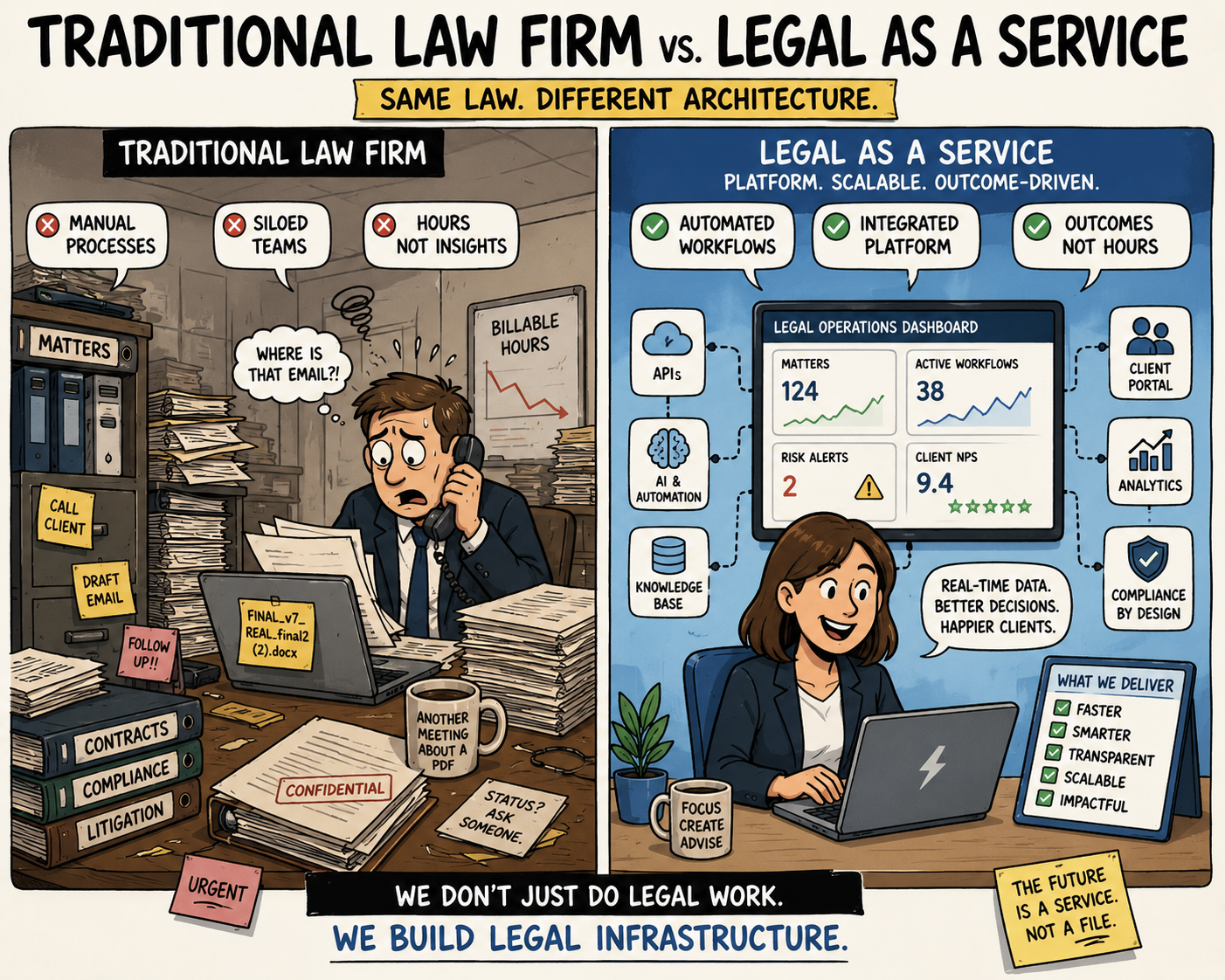
Traditional legal environments often rely on fragmented workflows, institutional memory, manual coordination, and document-centric processes.
Platform-oriented legal organizations increasingly operate through APIs, automation, knowledge systems, workflow orchestration, analytics, and continuously accessible client services.
The result is not simply greater efficiency.
It is a fundamentally different operating model for how legal services are delivered, integrated, and scaled.
As legal work becomes increasingly operational, the law firm itself starts behaving less like a standalone partnership — and more like a coordinated legal infrastructure layer.
This visual comparison complements the broader article:
Legal as a Service: Is the Corporate Law Firm Becoming a Platform?
Because modern clients increasingly expect: scalable delivery, operational transparency, integrated workflows, and continuously accessible legal support.
The real transformation is no longer only about digitizing legal work.
It is about redesigning the operational architecture through which legal services are delivered.
The future of corporate law may belong not to the firms with the most billable hours —
but to those capable of building the most trusted legal platforms.