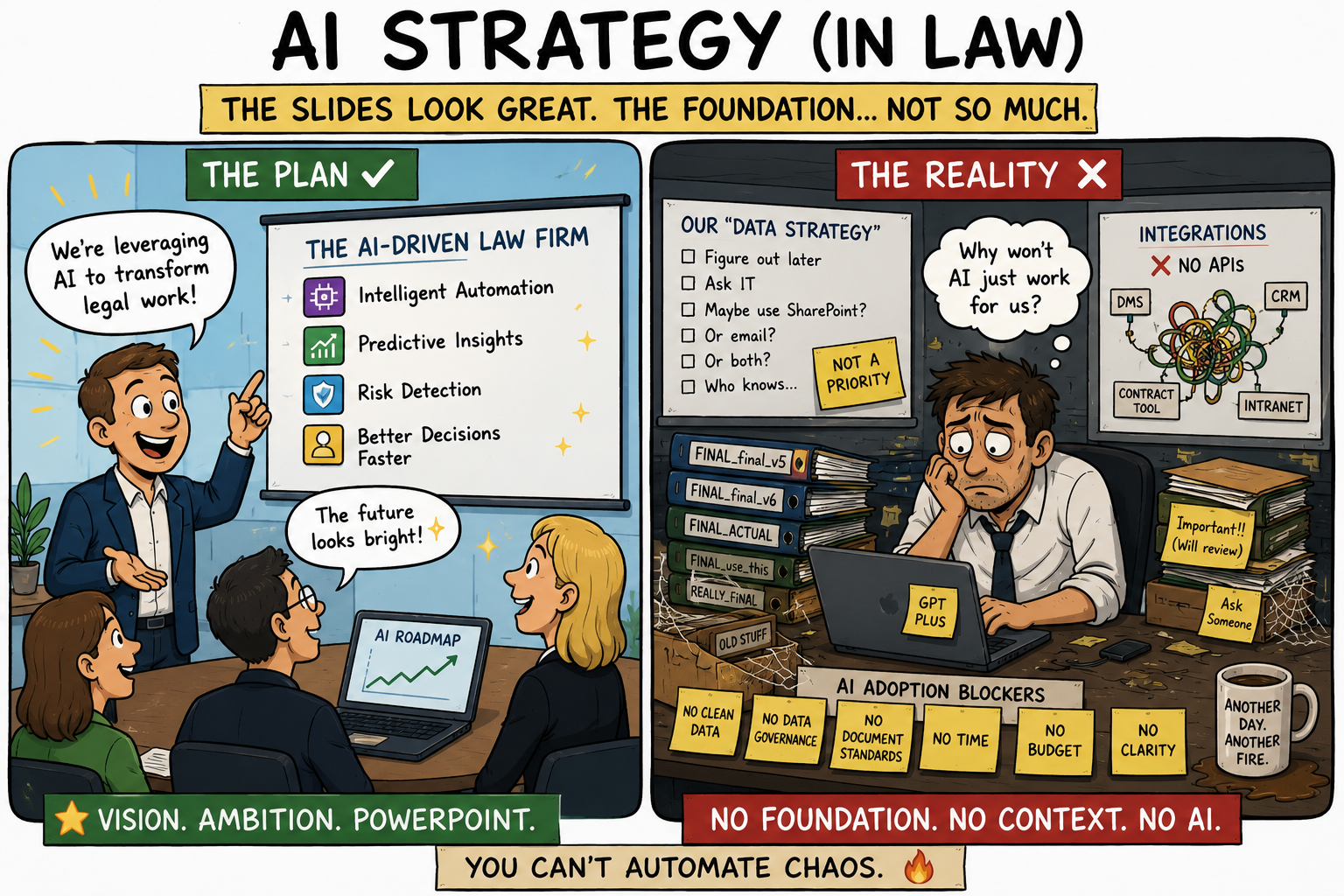
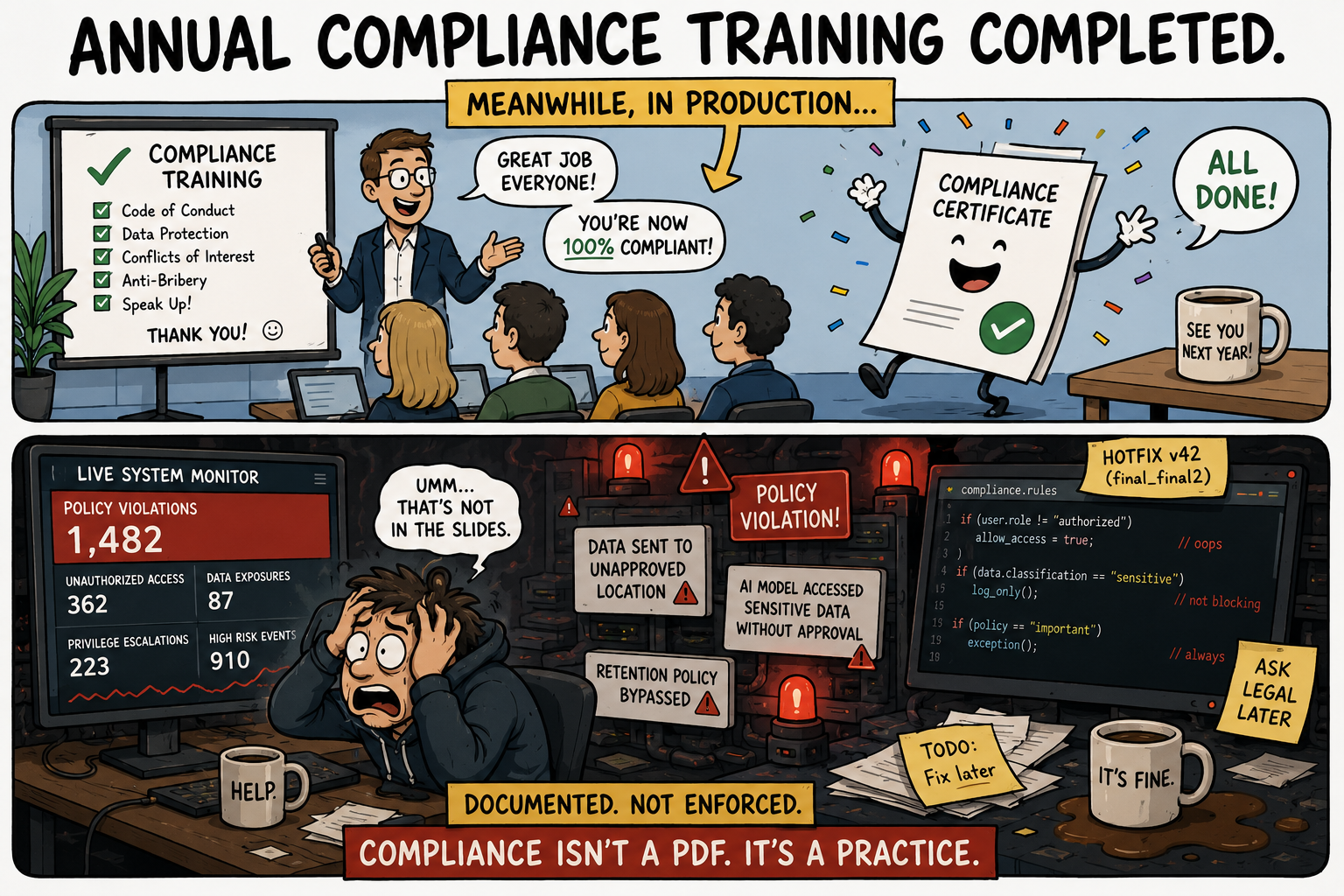
Compliance doesn’t fail because organizations lack policies.
It fails where governance exists in documents — but not in systems.
Many companies still treat compliance as a reporting exercise: training sessions, PDFs, signatures, audit checklists, annual certifications.
Meanwhile, production systems operate continuously — across cloud platforms, APIs, AI tools, data pipelines, and automated workflows.
Governance can no longer depend only on static documentation reviewed once a year.
It must become operational, observable, and continuously enforced at runtime.
Because a policy that cannot be validated inside the system where decisions actually happen is not governance.
It is theater.
“Documented. Not enforced.” is no longer just a compliance gap.
It is an infrastructure problem.
This visual commentary complements the broader article:
Compliance by Code: When Governance Becomes Continuous
As organizations become increasingly software-driven, governance is shifting from static documentation toward continuously observable operational systems capable of enforcing rules, monitoring controls, and validating compliance in real time.
In digital organizations, governance no longer exists only in policies and PDFs —
but in the operational systems where compliance is actually executed.