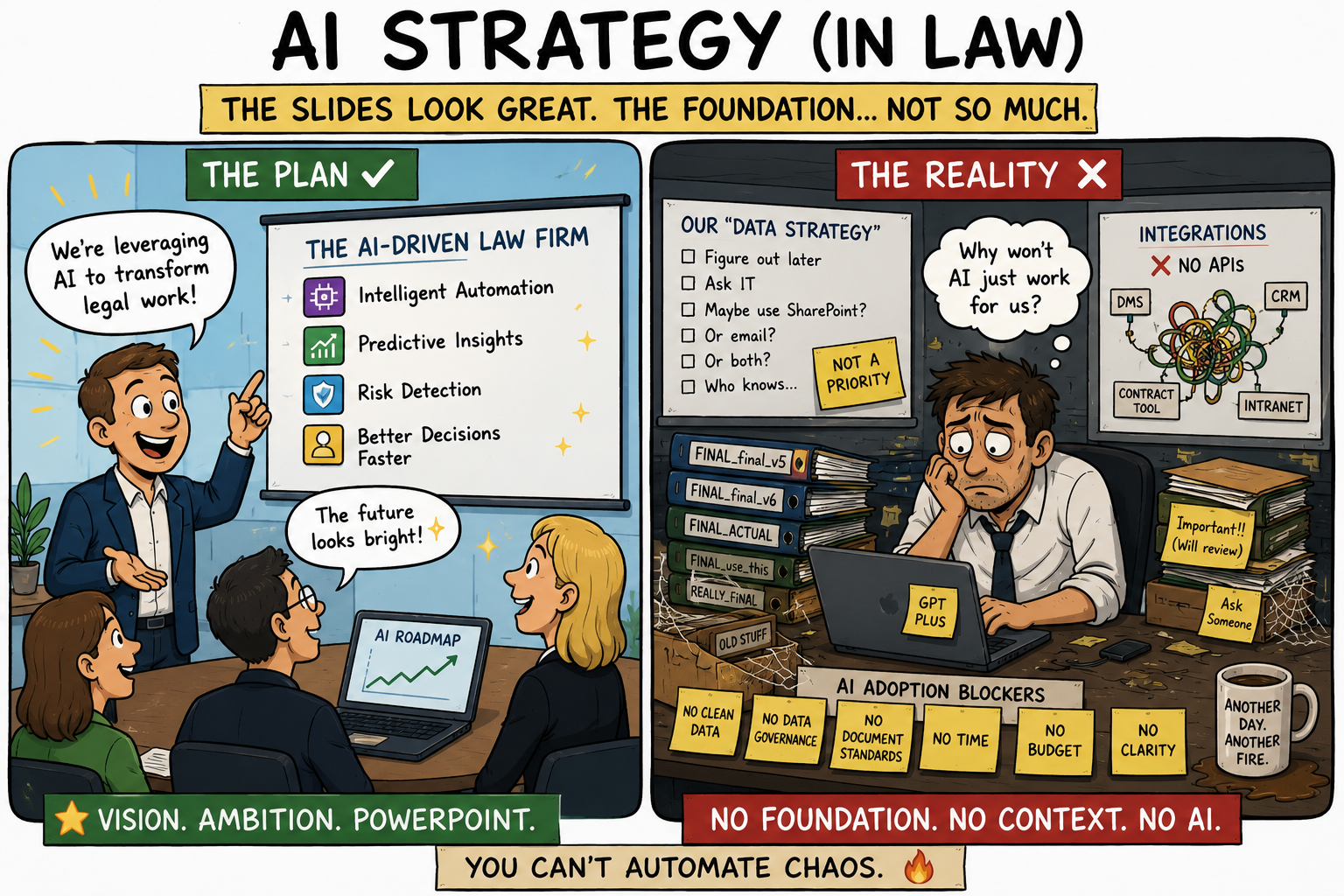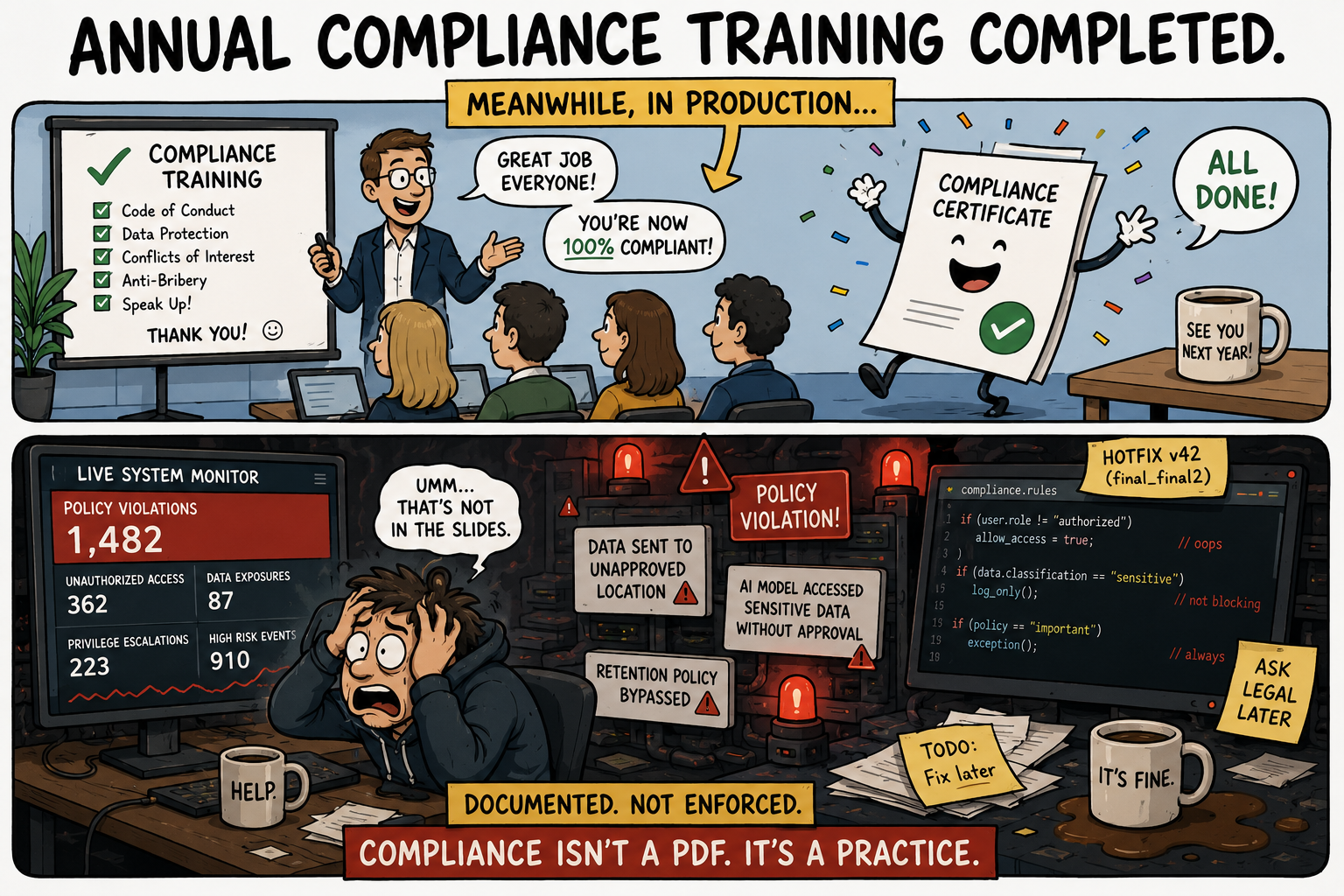



Modern organizations increasingly operate through APIs, automation pipelines, distributed platforms, and continuously evolving compliance requirements. Yet many legal systems still rely on static documents, fragmented workflows, institutional memory, and disconnected tooling. This article argues that law must evolve from document-centric administration toward modular, observable, and operational architectures — a shift described here as The Legal Stack.
Drawing parallels to software engineering, DevOps, and AI governance, the article explores how legal logic can become structured, executable, and integration-ready infrastructure for the digital age. It examines how contracts, compliance rules, governance processes, and regulatory obligations increasingly behave like interconnected system components rather than isolated documents. Ultimately, the article proposes that law is becoming less a static layer surrounding digital systems — and more a core part of the operational architecture itself.
Modern organizations run on software stacks — modular systems composed of interfaces, services, workflows, and infrastructure. Yet most legal systems are still built like static documents in a world that increasingly operates through APIs and automation.
In technology, everything has a stack — front-end interfaces, back-end services, databases, APIs, orchestration layers. Each layer has responsibilities, dependencies, and interfaces.
Law, by contrast, is still largely trapped in documents, PDFs, email chains, and organizational silos. Legal logic is often buried inside prose instead of exposed as structured, testable systems.
But as legal processes become increasingly digital, operational, and automated, this model no longer scales.
If software is shaping how the world operates, law must become architected for integration.
The Legal Stack: A New Mental Model
Legal systems can be understood the same way modern software systems are: as layered architectures composed of interfaces, logic, workflows, and infrastructure.
A modern Legal Stack might look like this:
- Interface Layer: Contracts, portals, policies, consent flows — the legal surfaces users interact with
- Logic Layer: Rights, obligations, permissions, liabilities, business rules, decision logic
- Automation Layer: Workflows, templates, orchestration engines, no-code systems, compliance automation
- Governance Layer: Statutory law, regulation, jurisdictional constraints, auditability, enforcement
Like any architecture, each layer depends on the others — but should remain modular enough to evolve independently.
Why This Matters
Law is no longer purely interpretive. It is increasingly operational.
Legal processes are now embedded into software platforms, exposed through APIs, executed across distributed systems, and monitored in real time. Yet in many organizations, legal logic is still hardcoded into disconnected tools without structure, observability, or version control.
That is neither scalable nor resilient.
“Most enterprise legal departments still operate like monoliths in a microservices world.”
In software engineering, abstraction and modularity enabled the modern digital economy. Legal systems now require the same transition.
- Reusable modules: standardized clauses, governance patterns, reusable compliance components
- Interoperable schemas: structured formats for contracts, identities, obligations, and regulatory data
- Clear interfaces: APIs between legal, operational, and technical systems
- Testable logic: simulation, validation, auditability, and compliance verification
- Observability: traceable legal events, responsibilities, and system-wide accountability
Real World Case – AI Governance Pipelines
Modern AI systems no longer operate purely as technical artifacts. They exist inside a growing network of legal obligations: data protection requirements, transparency mandates, auditability standards, human oversight obligations, risk classifications, and jurisdiction-specific compliance rules.
In many organizations, these requirements still exist as disconnected policies, PDFs, spreadsheets, and manual approval workflows. But as AI systems scale across products, regions, and infrastructure layers, this document-centric model quickly breaks down.
Increasingly, organizations are building AI governance pipelines where legal requirements become operational system components. Risk classifications automatically trigger review workflows. Data usage policies are enforced through infrastructure rules. Regulatory constraints are exposed through APIs. Model deployments require compliance validation before release, while audit logs continuously track accountability and decision paths.
In this model, compliance is no longer a static document reviewed after deployment. It becomes executable architecture embedded directly into the operational system itself.
The legal layer no longer exists outside the platform. It becomes part of the platform.
Legal Engineering Is Architecture
Legal Engineering is not simply about automating documents.
It is the discipline of designing systems where legal logic becomes structured, composable, observable, and executable.
In this model:
- Contracts become interfaces
- Clauses become components
- Rules become executable logic
- Compliance becomes infrastructure
- Legal teams become system designers
This is not theoretical. High-performing organizations are already moving toward operationalized legal architectures — especially in platform businesses, regulated industries, AI governance, and enterprise compliance environments.
Real-World Parallels
- DevOps → LegalOps: Continuous delivery and operationalization of legal processes
- Design Systems → Contract Systems: Shared clause libraries and governance patterns
- APIs → Legal Interfaces: Structured exchange between policy and implementation
- CI/CD → Continuous Compliance: Real-time validation of obligations, controls, and responsibilities
- Observability → Legal Traceability: Monitoring legal states, decisions, and accountability flows
The Cost of Staying Document-Centric
- Legal logic disappears inside bespoke tools and static documents
- Contracts remain black boxes instead of structured system objects
- Compliance becomes reactive rather than continuous
- Regulatory adaptation becomes slow and expensive
- Legal innovation fails to scale across systems and organizations
“If software is eating the world, law must become composable.”
Conclusion
Law is no longer only about interpretation. It is increasingly about integration, orchestration, and system design.
The organizations that treat legal structures as architecture — not merely documentation — will build more adaptive, transparent, and resilient systems.
The Legal Stack is more than a metaphor.
It is a blueprint for making law operational at the speed of digital infrastructure.
Build the stack. Expose the logic. Make law scale.
- Giannakis, M., Doran, D., Mee, D., Papadopoulos, T., & Dubey, R. (2018). The design and delivery of modular legal services: implications for supply chain strategy. International Journal of Production Research, 56(20), 6607–6627. URL: https://www.tandfonline.com/doi/full/10.1080/00207543.2018.1449976
- Bertl, M., Price, S., & Draheim, D. (2026). Transforming legal texts into computational logic: Enhancing next generation public sector automation through explainable AI decision support. International Journal of Cognitive Computing in Engineering, 7, 40–57. URL: https://www.sciencedirect.com/science/article/pii/S2666307425000336
- Zakharchenko, A. (2026). Integrating Continuous Compliance into DevSecOps Pipelines: A Data Engineering Perspective. Software, 5(1), 6. URL: https://www.mdpi.com/2674-113X/5/1/6
- Rispoli, R. (2026). Continuous AI Governance: Embedding Oversight into the CI/CD Pipeline. AIM Consulting White Paper. URL: https://aimconsulting.com/insights/continuous-ai-governance-cicd-pipeline-white-paper
- Bandara, E., Gunaratna, A., Gore, R., Rahman, A., Mukkamala, R., Shetty, S., Rajapakse, S., Kularathna, I., Foytik, P., Bouk, S. H., Liang, X., Hass, A., Wee Keong, N., & De Zoysa, K. (2026). AI Trust OS -- A Continuous Governance Framework for Autonomous AI Observability and Zero-Trust Compliance in Enterprise Environments. arXiv preprint arXiv:2604.04749. URL: https://arxiv.org/abs/2604.04749
- Sidhu, N. (2026). Why governance is moving to the middleware layer. TechRadar Pro. URL: https://www.techradar.com/pro/why-governance-is-moving-to-the-middleware-layer
- Contegiacomo, J. (2025). Legal Operations: Transforming Legal Departments into Strategic Business Partners. ABA Business Law Today. URL: https://www.americanbar.org/groups/business_law/resources/business-law-today/2025-march/transforming-legal-departments-into-strategic-business-partners/