
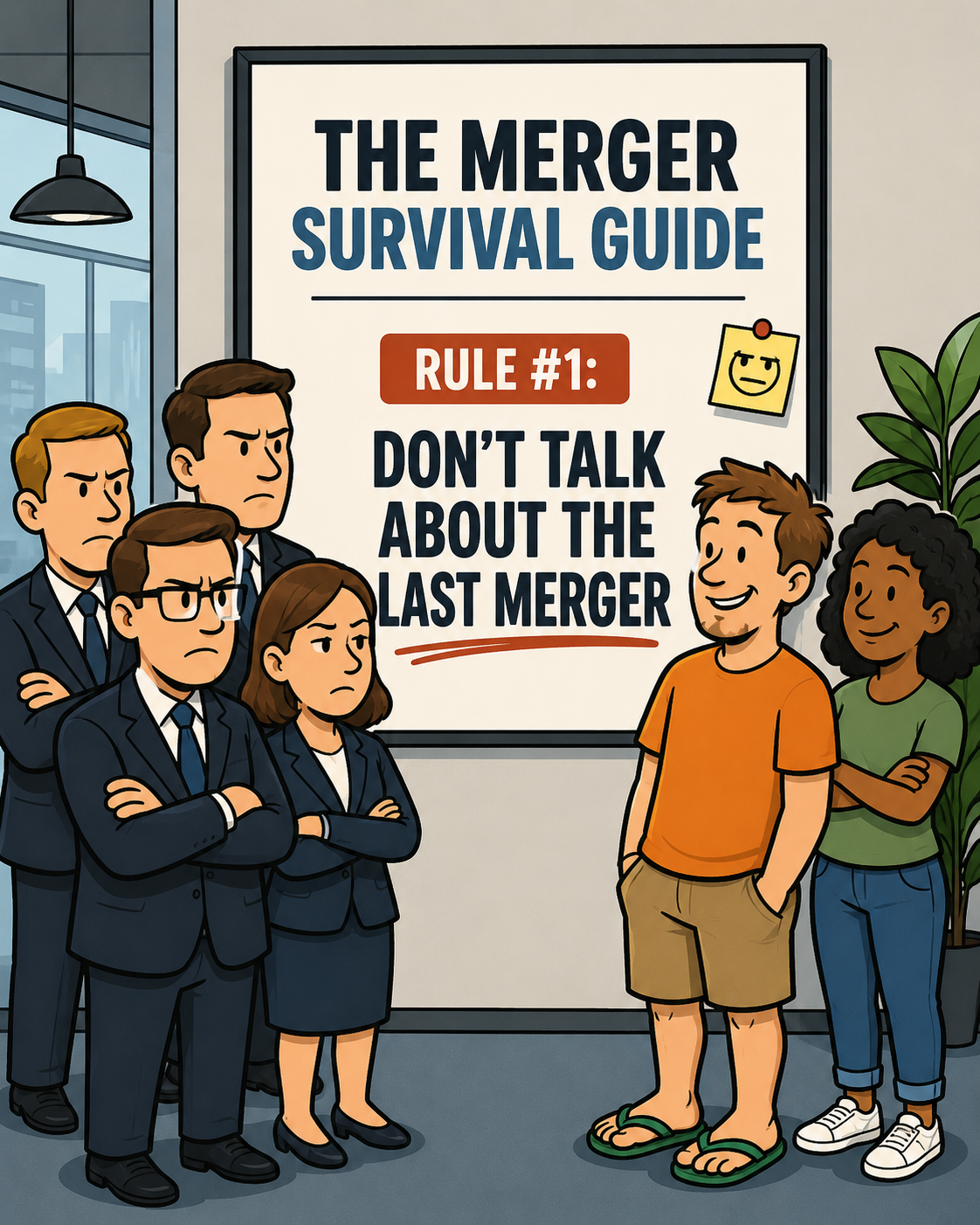
Mergers rarely begin with a clean slate.
Even when systems, branding, and reporting structures change, organizations often continue carrying unresolved histories beneath the surface.
Every merger creates an official future — but also an unofficial memory of what came before. Employees remember failed integrations, broken promises, political struggles, and the gradual loss of identity that earlier transformations may have caused.
As a result, post-merger organizations frequently operate in two realities at once:
the formal narrative presented in strategy decks,
and the emotional reality people discuss privately after meetings.
This visual satire complements the broader article:
The Cultural Hangover of M&A: Why Ignoring the Past Undermines the Future
What appears to leadership as resistance is often unresolved institutional memory. What appears to be “culture problems” may actually be accumulated emotional debt from earlier transitions that were never fully processed.
Over time, organizations develop unofficial survival rules:
“Don’t trust the first restructuring plan.”
“Wait until leadership changes again.”
“Don’t talk too openly about the last merger.”
These informal narratives shape collaboration far more strongly than most integration playbooks acknowledge.
Organizations do not only inherit systems during mergers —
they also inherit unresolved stories.