
Legacy systems are often less understood than relied upon.
In many organizations, critical infrastructure survives not because it is modern, elegant, or strategically planned — but because the operational risk of replacing it has become too high.
Over decades, enterprise systems accumulate undocumented dependencies, hidden business rules, manual workarounds, compatibility layers, and institutional knowledge that exists nowhere else.
What begins as software gradually becomes infrastructure. What begins as implementation detail gradually becomes organizational reality.
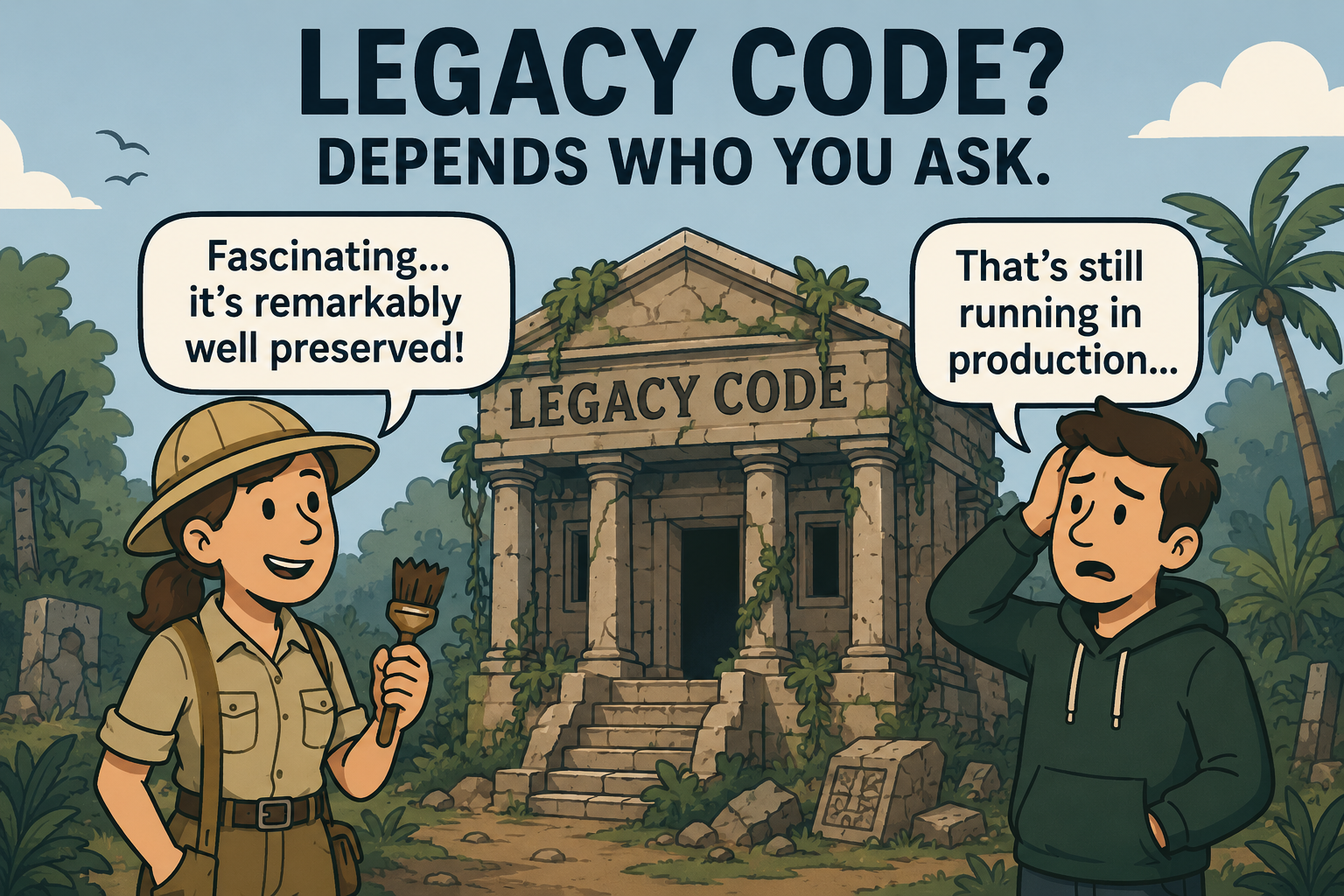
This visual satire complements the broader article:
The Infrastructure Nobody Dares to Touch: The Archaeology of Enterprise IT
The meme captures two perspectives that often coexist inside large organizations:
- the architectural fascination with systems that survived decades
- the operational fear of touching infrastructure that still runs critical production workloads
Legacy systems rarely persist because organizations intentionally preserve them.
They persist because the accumulated complexity surrounding them becomes increasingly difficult to fully understand.
At some point, enterprise infrastructure stops being merely technical architecture.
It becomes organizational memory encoded in software.
Some systems survive not because organizations trust them —
but because nobody fully understands what happens when they disappear.